Company\Resources\Ask the Experts: How Is the Obesity Care Field Changing to Include Assessment of Body Composition?
Ask the Experts: How Is the Obesity Care Field Changing to Include Assessment of Body Composition?

Blog
Ask the Experts
Obesity Medicine
Patient & Client Education
Understanding Body Composition
Weight Management
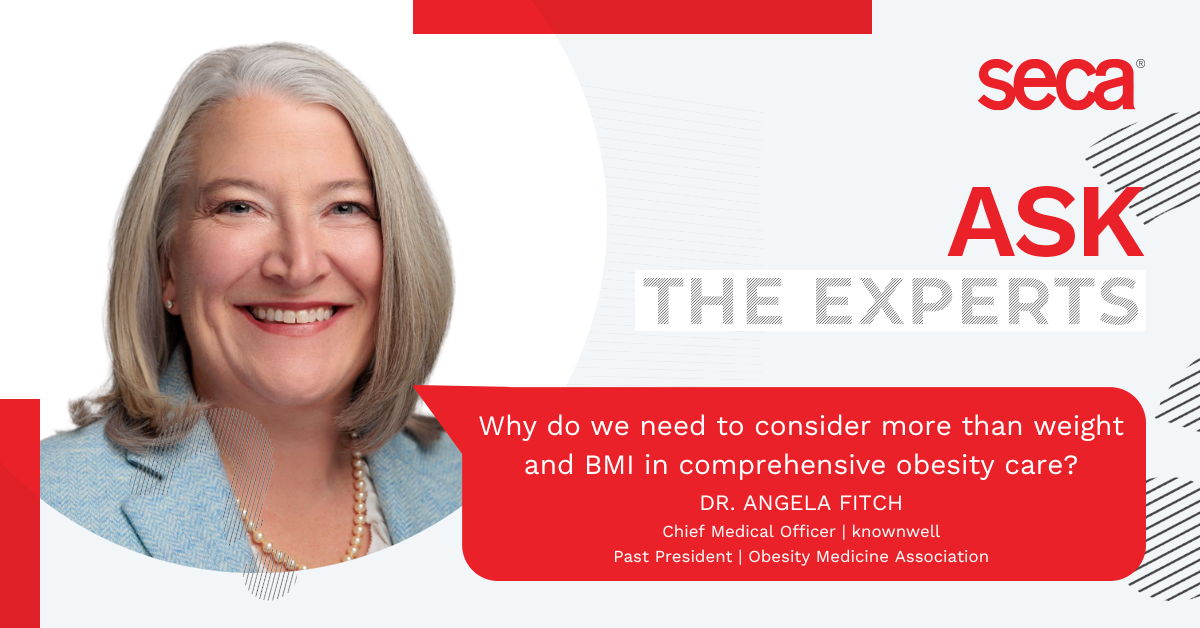
The field of obesity care is evolving to include comprehensive body composition assessments, examining aspects like fat mass, fat-free mass, and total body water.
These assessments give healthcare providers a more accurate understanding of a patient’s health, enabling them to tailor treatment plans effectively.
Obesity care is no longer just about weight loss—it’s about what that weight is made of. As the field evolves, healthcare providers are shifting from a singular focus on the scale to a more nuanced understanding of body composition. By measuring fat mass, muscle mass, and total body water, clinicians gain clearer insights into each patient’s metabolic health, enabling more personalized and effective treatment strategies.
Preserving muscle mass, a key part of fat-free mass, is crucial for metabolic health, as it significantly contributes to resting energy expenditure. Maintaining muscle mass helps keep a higher metabolic rate, essential for effective weight management. During obesity treatment, it’s vital to focus on reducing fat mass while preserving muscle to ensure long-term metabolic health. While no strict guidelines exist, it’s generally acceptable for fat-free mass loss to be around 25% or less of total weight loss, helping providers maintain a healthy balance between fat and muscle loss.
This shift towards incorporating body composition assessments allows for more personalized interventions. By understanding a patient's specific body makeup, healthcare providers can develop tailored plans that optimize metabolic health. For instance, a patient with high visceral fat may benefit from targeted diet and exercise interventions, while those with low muscle mass can be guided towards resistance training to build and maintain muscle.
Assessing body composition also enhances patient education and motivation. When patients see detailed information about their body composition, they better understand their treatment plans and stay committed to their health goals. Visualizing changes in fat and muscle mass provides tangible evidence of progress, boosting motivation and adherence to prescribed interventions. This holistic approach ensures that patients lose weight and achieve a healthier, more balanced body composition.
As we continue to move beyond BMI, body composition assessments are becoming essential in modern obesity care. By prioritizing fat loss while preserving muscle and optimizing hydration, providers can support better metabolic outcomes and long-term success. More than numbers on a chart, this shift reflects a broader movement toward compassionate, science-backed, and individualized care—giving patients not only better data but a better path forward.
.png)
.png)
.png)
.png)
.png)
.png)